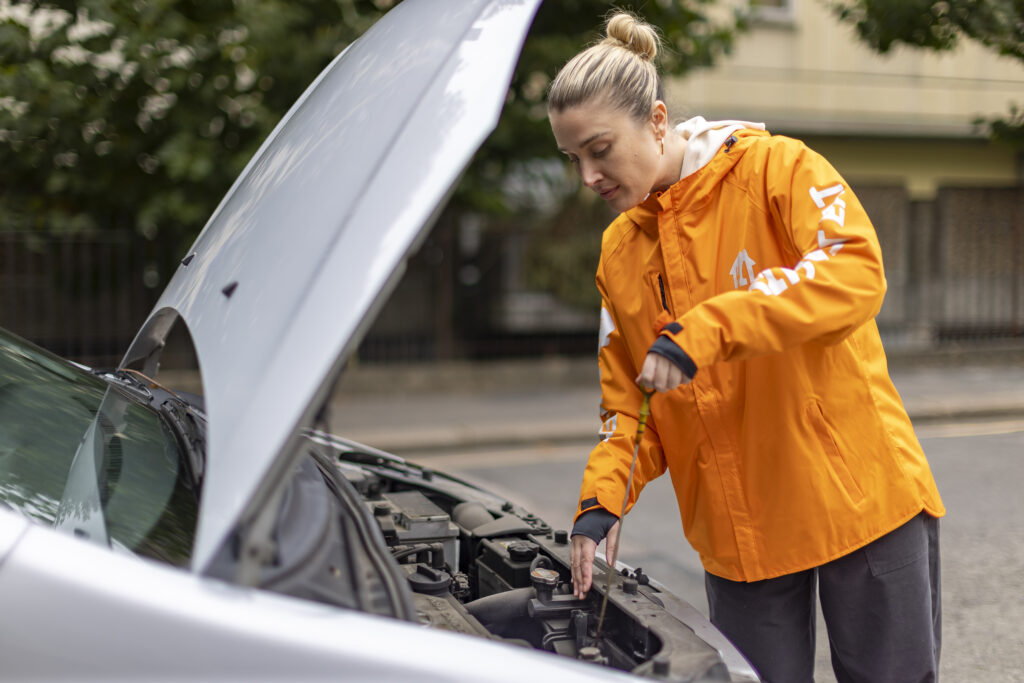
























The amount of fuel you use has a lot to do with the kind of car you drive, but whatever you drive there are things you can do to save fuel, save money and cut pollution. By following our top tips you could expect to save between 10% – 33% on your weekly fuel bill. This is on top of the 4p per liter of fuel you can save at Shell with your exclusive Shell Fuel Saver Card.
1. Take it easy on the accelerator
Driving erratically or aggressively can cause your car to consume up to 60% more fuel. Pull away from lights smoothly and don’t overtake unnecessarily.
Pushing the accelerator down a long way to avoid changing into a lower gear (into second from third, for instance) uses more fuel, not less. Go easy on the accelerator wherever possible.
2. Idle or switch off?
Unless your car has an automatic stop/start system, don’t switch off to save fuel unless your engine’s warm, you expect not to move for 3 minutes or so (at a level crossing for example) and you know you’ve got a good battery.
3. Ditch unnecessary weight
The heavier your car, the more fuel it needs to move around. The more pared back your car is, the lighter and more efficient it will be. So remove roof racks and boxes when you’re not using them.
4. Stick to the speed limit
Going faster might save you time, but it won’t necessarily save you money. Driving at 70mph uses up to 9% more than driving at 60mph and up to 15% more than at 50mph. Taking it up to 80mph can use up to 25% more fuel than at 70mph.
5. Check your tyre pressures
The lower the tyre pressure, the more fuel the car needs to move it down the road. We recommend that you take five minutes every fortnight to check the tyres. If you’re not sure what the pressure should be, you can normally find the figures near the lock inside the driver’s door.
6. Switch off the aircon
British weather is a fickle thing. It’s tempting to leave the aircon on all year round; it stops the windows misting up in the winter and saves you worrying about the in-car temperature. But, and this is a big but, aircon uses a lot of fuel. It’s more economical to save it for extreme temperatures.
7. Keep your windows closed
It’s not such a problem when you’re driving around town, but when you’re on the motorway and moving more quickly, the shape of your car is very important. You can’t do much about how aerodynamic your car is (or is not), but you can avoid making it worse by not leaving the windows and sunroof open. It’s better to use the air vents for most of the year, and the aircon when it gets too hot.
8. Change gear earlier
Don’t labour the engine, but try changing up at an engine speed of around 2,000 rpm in a diesel car or 2,500 rpm in a petrol car. This can make such a difference and gear shift indicators can even be retrofitted to show the most efficient gear change points.
9. Plan your journey
Getting lost wastes fuel. Check traffic news before you go too.
10. Keep your vehicle well maintained
Ensuring you keep your vehicle maintained and up to date with servicing will improve the efficiency of your vehicle, and therefore will improve your fuel consumption. Regular servicing can improve your miles per gallon (MPG) and can help you run a more efficient engine. This is because services check the spark plugs, engine oil levels and filters, and change them if required. Check out discounts with Halfords when signed up to Onsi.